Mind Maps is a great tool ideas management tool, but how to use mind map practically and effectively? In this article we will go over 10 brilliant uses for mind maps.

1. Mind Map for Idea Generation
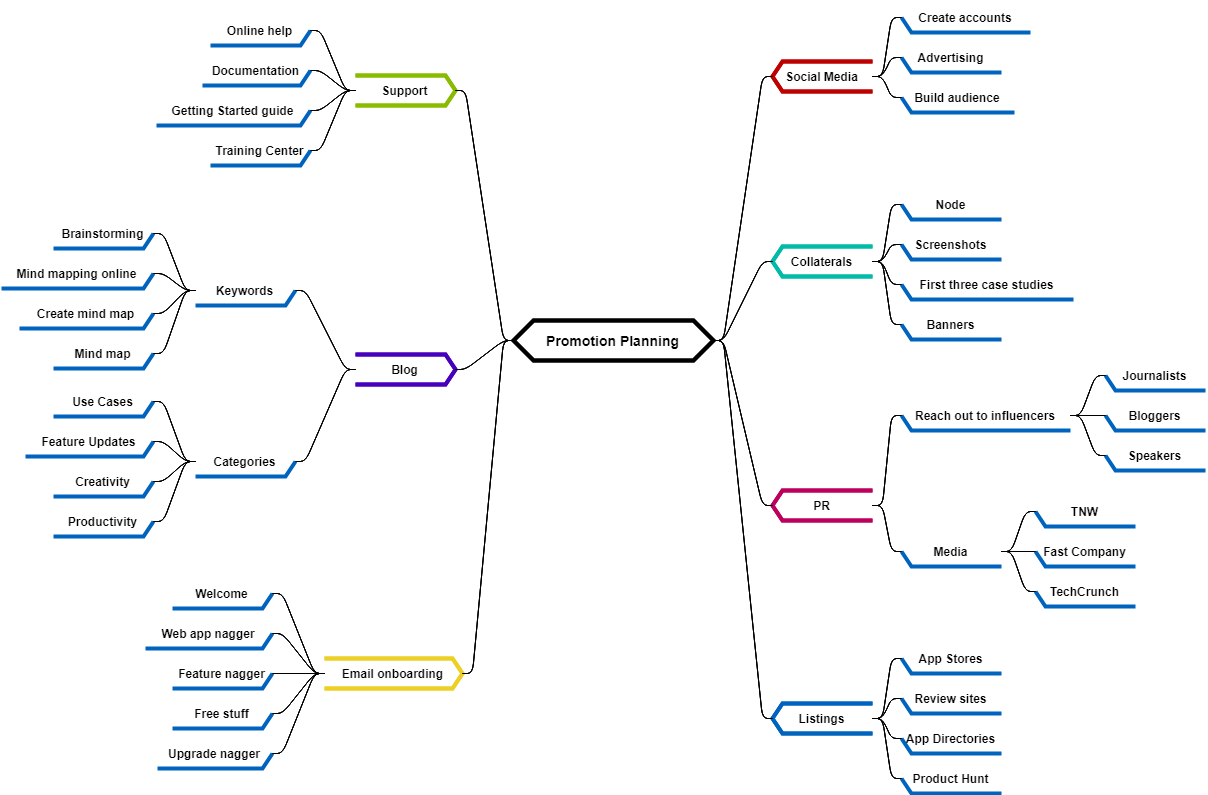
Set the topic for which you want to generate ideas, then radiate out every idea that comes into your mind, forming a mind map of branched ideas.
(Mind Map created by the Online Mind Map Tool of Visual Paradigm Online)
Review the nodes on the map, keep thinking, and keep updating the map with more sub-branches. When you’re done, look through your final mind map and decide the action to take in realizing your ideas.
2. Mind Map for Summarizing Data
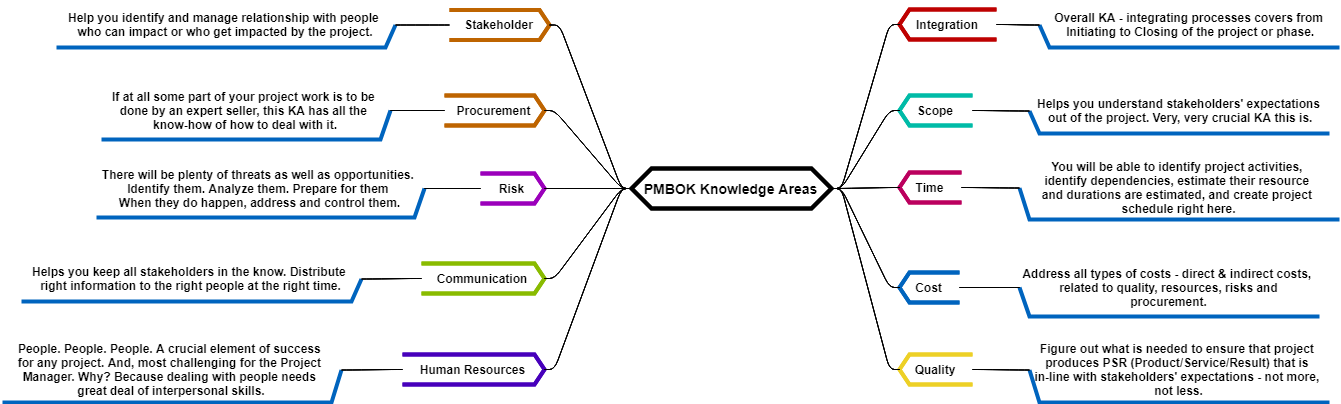
When you’ve learned something new, or have read a book or article, you can develop a mind map to retain the knowledge and information acquired.
When you’ve read a book, you can develop a mind map by creating branches for each chapter. Then, create sub-branches for those important ideas of each chapter. You may also include quotes and your own comments in the map.
(Mind Map created by the Online Mind Map Tool of Visual Paradigm Online)
3. Mind Map for Presentation
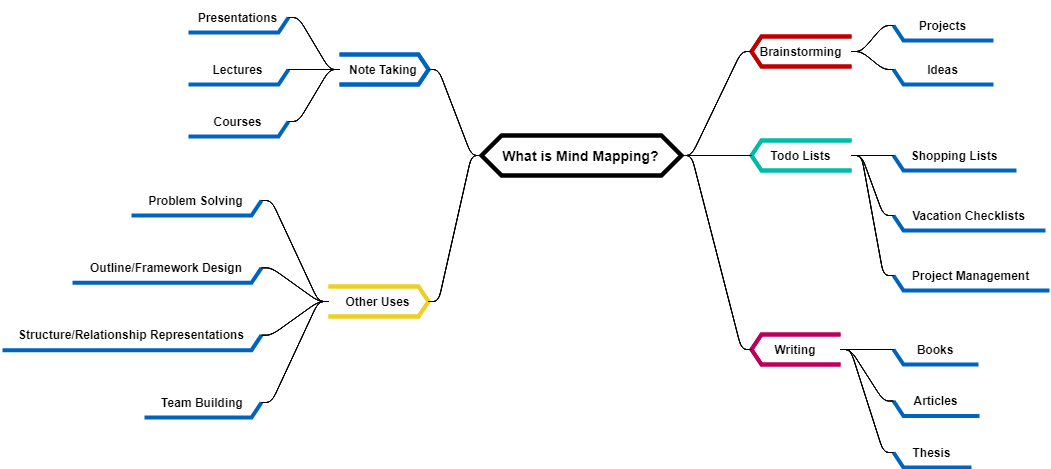
The nested structure of mind map makes it works very well in presenting complex ideas. To use a mind map in a presentation makes it more interesting and engaging. Participants can understand your idea and communicate better.
(Mind Map created by the Online Mind Map Tool of Visual Paradigm Online)
4. Mind Map for Problem Solving
Mind map is also an effective problem solving tool. Simply create a center node that represents the problem you want to study and solve, and then create six branches leading out of the center idea and write one of the following questions on each branch:
- What?
- When?
- Where?
- Why?
- How?
- Who?
Think and answer these questions by creating sub-branches from the 6 nodes. Finally, identify solutions based on your finding.
Instead of the 6 questions suggested above, you can also apply the 6 thinking hats technique in studying a problem.
5. Mind Map for Note Taking
Create a mind map with each agenda item represented as one of the main branches. As the meeting progresses, jot down the discussed ideas as sub-branches of those agenda items.
6. Mind Map for Project Management
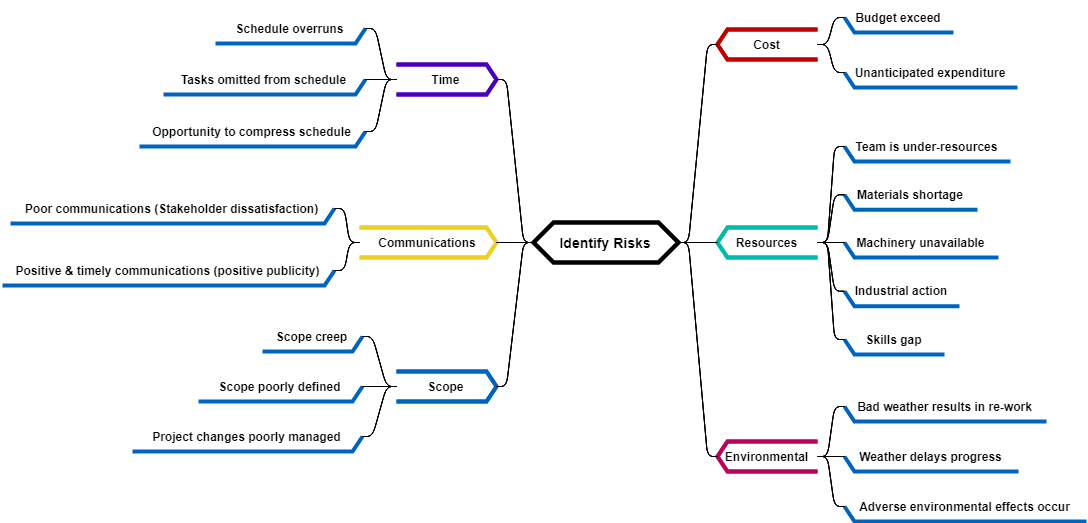
Mind map is used widely in project management. Followings are some typical uses:
- Cost management: Shows the categories of cost items and the items.
- Risk management: Shows the risk categories, risk items and the personnel involved in risk prioritization, risk identification, and risk management.
- Scheduling: Shows the major phases, activities and deliverable of the project.
(Mind Map created by the Online Mind Map Tool of Visual Paradigm Online)
7. Business Planning
Develop a mind map that structures major business concept, your legal structure, marketing plan, competitive analysis, financial status, etc.
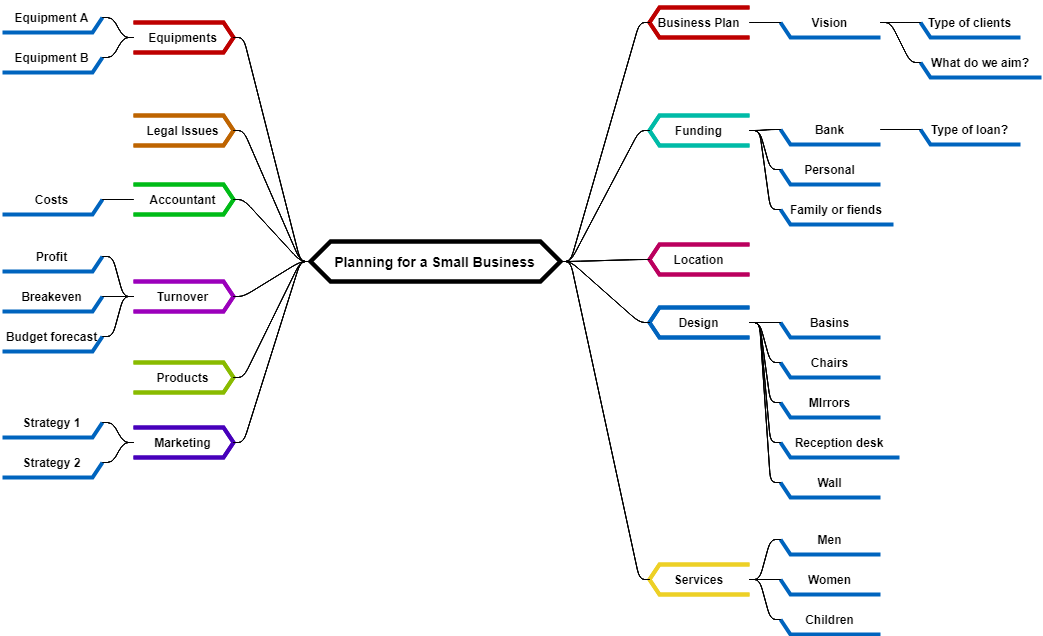
(Mind Map created by the Online Mind Map Tool of Visual Paradigm Online)
8. Mind Map as To-Do List
Structure your work items into a mind map with two or more levels. Gradually update the map by adding more branches that represent the things you need to do. You may apply different color code to the node to indicate the priority, status and/or urgency of work.
9. Mind Map for Event Planning
Use mind map for event planning such as wedding planning or holiday planning. Take holiday planning as example, create branches that represent when the holiday will begin and end, where to visit, who to go, what to bring and any other special arrangement and so on. Each sub-branch can be further broken down by adding more details.
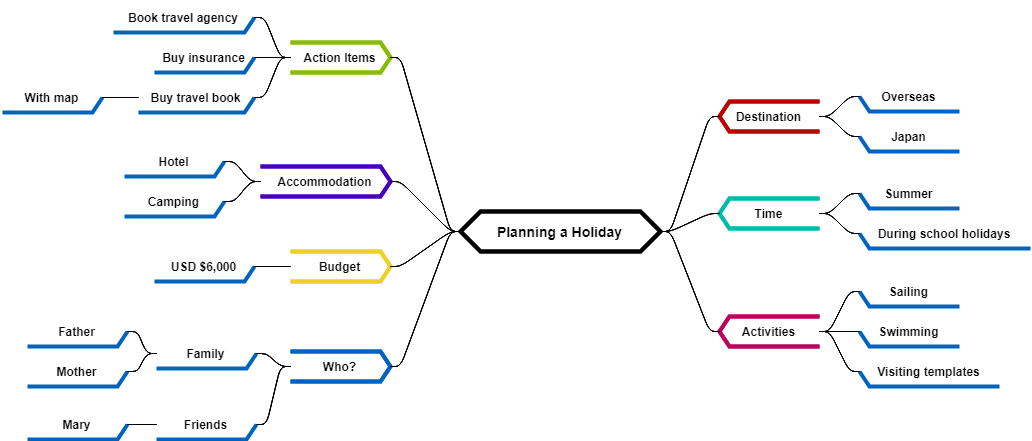
(Mind Map created by the Online Mind Map Tool of Visual Paradigm Online)
10. Mind Map for SWOT Analysis
SWOT (Strength, Weakness, Opportunities, and Threats) helps you identify both the strong and weak sides of your business as well as the opportunities and threats that you are facing. You can identify the SWOT (Strength, Weakness, Opportunities, and Threats) easily with the help of a SWOT mind map. A SWOT mind map simply has 4 main branches that represent the 4 aspects of SWOT. Sub-branches are created under the 4 branches in listing out the individual items of SWOT.
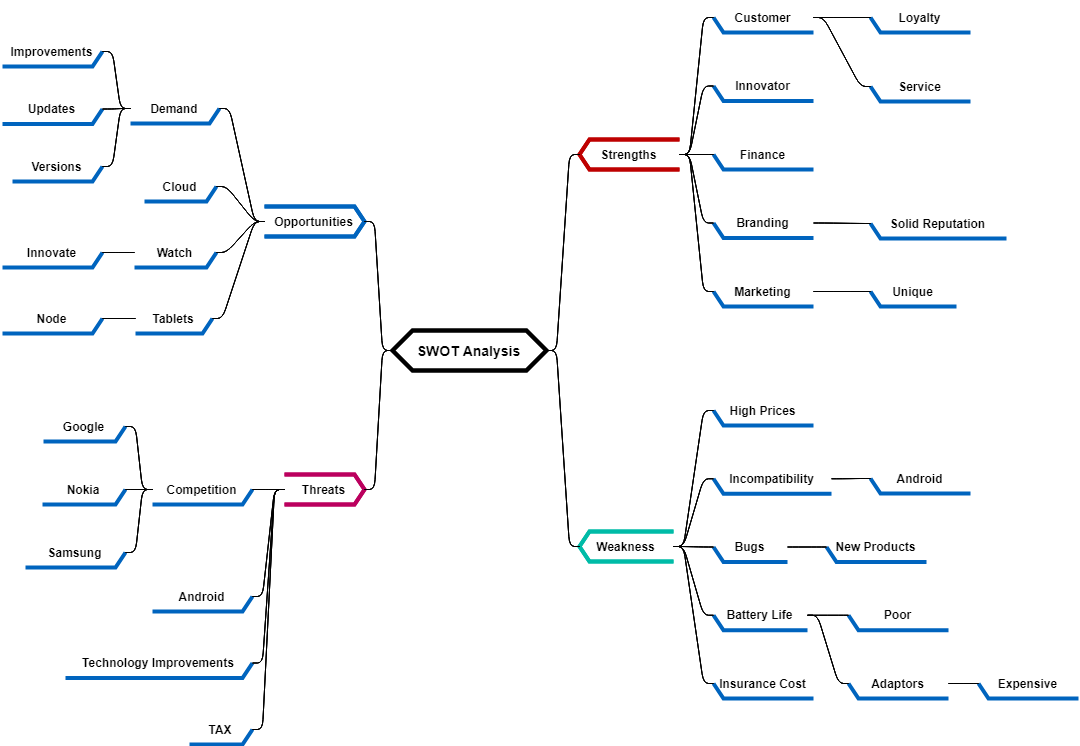
(Mind Map created by the Online Mind Map Tool of Visual Paradigm Online)
Conclusion
Mind maps are a powerful tool that can be applied in different areas for different purposes (e.g. generating/organizing ideas, planning, decision making and so on). The 10 uses for mind maps explained above are just a few examples of what mind maps are capable of. Try it yourself and see how mind maps helps solving your problems. Enjoy!
